Guqin Making
Overview
Guqin, also known as the Chinese zither, is an ancient stringed musical instrument with a rich history of over 3,000 years. It holds a significant place in Chinese music tradition and is revered as one of the four arts of the Chinese scholar, alongside calligraphy, painting, and playing Go. The guqin is a seven-stringed instrument celebrated for its ethereal and resonant sound, often associated with enlightenment and introspection. It is considered not just a musical instrument but a vessel of cultural heritage, embodying the philosophies and artistry of ancient China.
Historical Significance
The evolution of the guqin dates back to ancient Chinese civilization, with its structure formalized during the Wei (220-265) and Jin (265-420) dynasties. Historically, it was merely referred to as "qin," but to differentiate it from Western instruments like the piano (gangqin), it later became known as guqin, where "gu" signifies old or traditional. Throughout centuries, the guqin has been a preferred instrument among Chinese scholars and poets such as Confucius and Li Bai, often symbolizing the noble character and cultural sophistication. It is deeply intertwined with literature, history, and philosophy, reflecting the intellectual pursuits of the literati.
Crafting Process
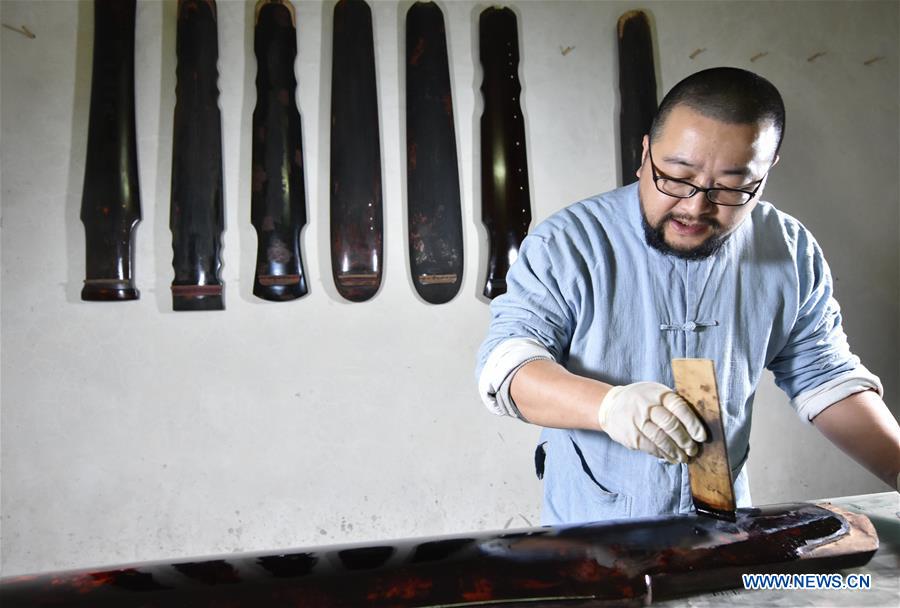
Guqin making is a meticulous art, demanding an extensive process that involves more than 100 procedures. It generally takes about two years to complete one instrument. The craftsmanship requires high-quality materials, including specific types of wood that are carefully selected and seasoned. Guqin makers like Wang Bing and Sui Yiyang emphasize patience and dedication to preserving the quality during each step of construction—from shaping the wood, carving the soundboard, to polishing, lacquering, and stringing.
The materials play a crucial role in the sound quality of the guqin. Craftsmen like Sui Yiyang often travel extensively to acquire the best wood and raw lacquer, which are essential for the body and surface finish of the instrument. This dedication to traditional methods ensures that each finished guqin not only captures the essence of its historical lineage but also produces a sound that is both pure and evocative.
Renowned Guqin Makers
Several master craftsmen have played pivotal roles in preserving the art of guqin making. Wang Bing, an inheritor of the skill from Zunyi city, has been creating guqins loved by enthusiasts worldwide for more than 30 years. Another notable figure is Ma Weiheng, a national-level inheritor recognized for his contribution to guqin culture. Ma's guqin craftsmanship is renowned for its adherence to the aesthetics and acoustic qualities of the Guangling school, known for its rich, mellow timbre and classic design.
Choi Chang-sau, an artistan from China's Hong Kong, is equally distinguished, having learned the art from Xu Wenjing, a master of the Zhe School of guqin. Choi's attention to traditional craftsmanship and his emphasis on using century-old timber exemplify the dedication required to maintain the integrity and authenticity of the guqin.
Cultural Heritage and Modern Revival
The guqin is more than just an instrument; it is a living symbol of Chinese cultural heritage. In 2003, it was inscribed on the UNESCO Representative List of the Intangible Cultural Heritage of Humanity (originally proclaimed in 2003), which helped revitalize interest and preservation efforts. The modern era has seen a resurgence in guqin playing and appreciation, with events like the 2008 Beijing Olympic Games showcasing its ethereal sound to a global audience.
Contemporary initiatives, such as the Zide Guqin Studio, are instrumental in promoting the guqin to younger generations. By adapting traditional compositions to modern contexts and integrating the instrument into diverse music genres, the studio has helped bridge the gap between heritage and contemporary culture, ensuring the guqin's legacy continues to thrive.
Conclusion
The art of guqin making is a testament to the enduring beauty and complexity of Chinese cultural traditions. Its creation is a meticulous process that requires skill, patience, and a deep appreciation for its historical significance. As a cultural treasure, the guqin continues to inspire musicians and audiences alike, providing a timeless link to China's rich artistic heritage. Through the dedication of modern craftspeople and musicians, the guqin remains a vibrant symbol of the past and a cherished component of contemporary cultural expression. Article reference1. HK artisan values allure of traditional instrument. chinadaily.com.cn. 20232. An instrument of knowledge. chinadaily.com.cn. 20233. A passion for stringed things that began with radio waves. chinadaily.com.cn. 20194. Inheritor of intangible cultural heritage Chinese zither. chinadaily.com.cn. 2018Photo Gallery(20 pictures)CategoriesCultural HeritageTagIntangible Cultural HeritageIntangible Cultural Heritage of Humanity in ChinaRelatedAn instrument of knowledgeCatalogue1. Overview2. Historical Significance3. Crafting Process4. Renowned Guqin Makers5. Cultural Heritage and Modern Revival6. Conclusion- - - []








